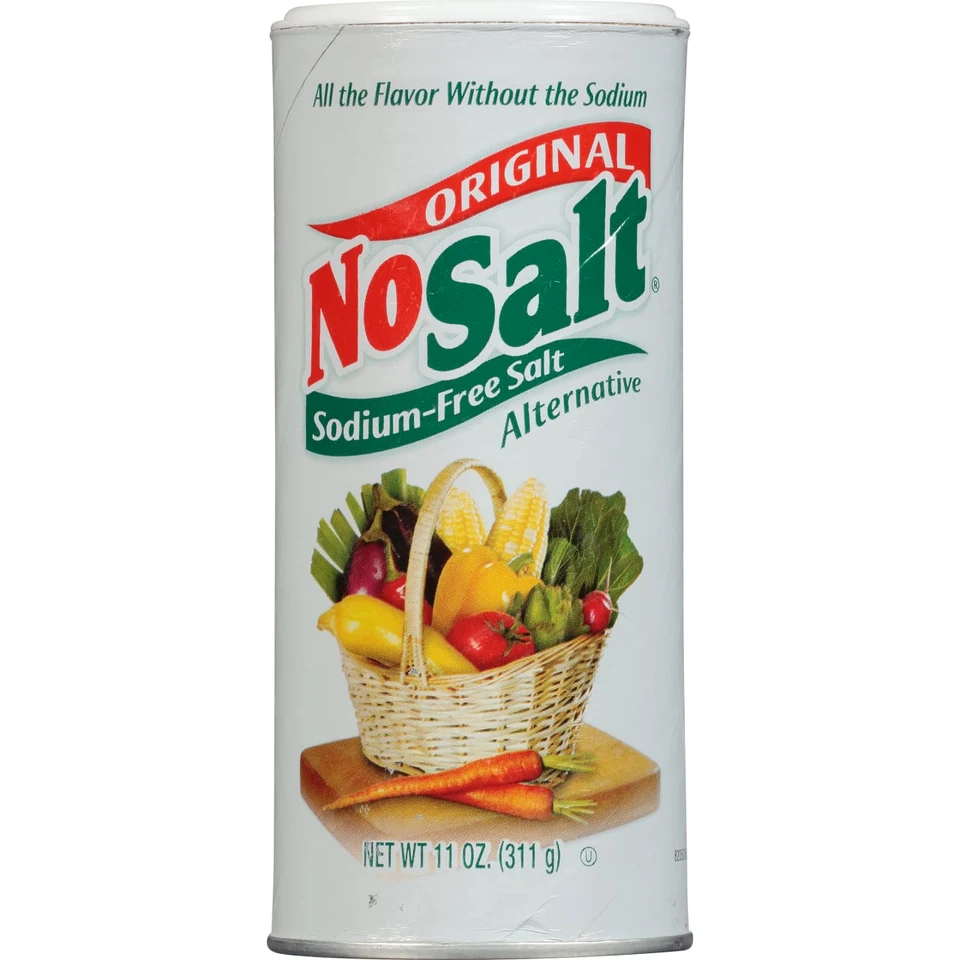
NoSalt Original contains potassium chloride instead of the sodium chloride used in table salt. Before buying it, read the ingredients and precautions, then choose the number of canisters you need. This guide explains the label, the difference between sodium-free and reduced-sodium products, and how to compare the single, two-canister, and six-canister packs.
Read the product name before the claims
The full name is NoSalt Original Sodium-Free Salt Alternative. Look for that name when comparing packs, since a search for 'salt alternatives' can also bring up herb blends and other brands. Original is sold for seasoning, cooking, and baking. It isn't a multivitamin or a product designed to tell you how much potassium you personally need.
The words on the front should agree with the item selected on the product page. If you are choosing a pack of two, check that the title and selected quantity say two canisters, each containing 11 ounces. A picture of one canister may show the product inside a multipack, but the written pack information still needs to make the total quantity clear.
Similar names are not proof of the same item. NoSalt and other salt-alternative brands have their own labels, formulations, and package sizes. A search result can also contain related products that are not NoSalt at all. Open the exact item you intend to buy and read its details rather than treating a search thumbnail as the final specification.
On our site, the single 11 oz canister, two-pack, and six-pack represent different quantities of Original. The pack size does not make the contents stronger or weaker. Decide which quantity fits your kitchen after you understand the product itself.
Read the ingredient list
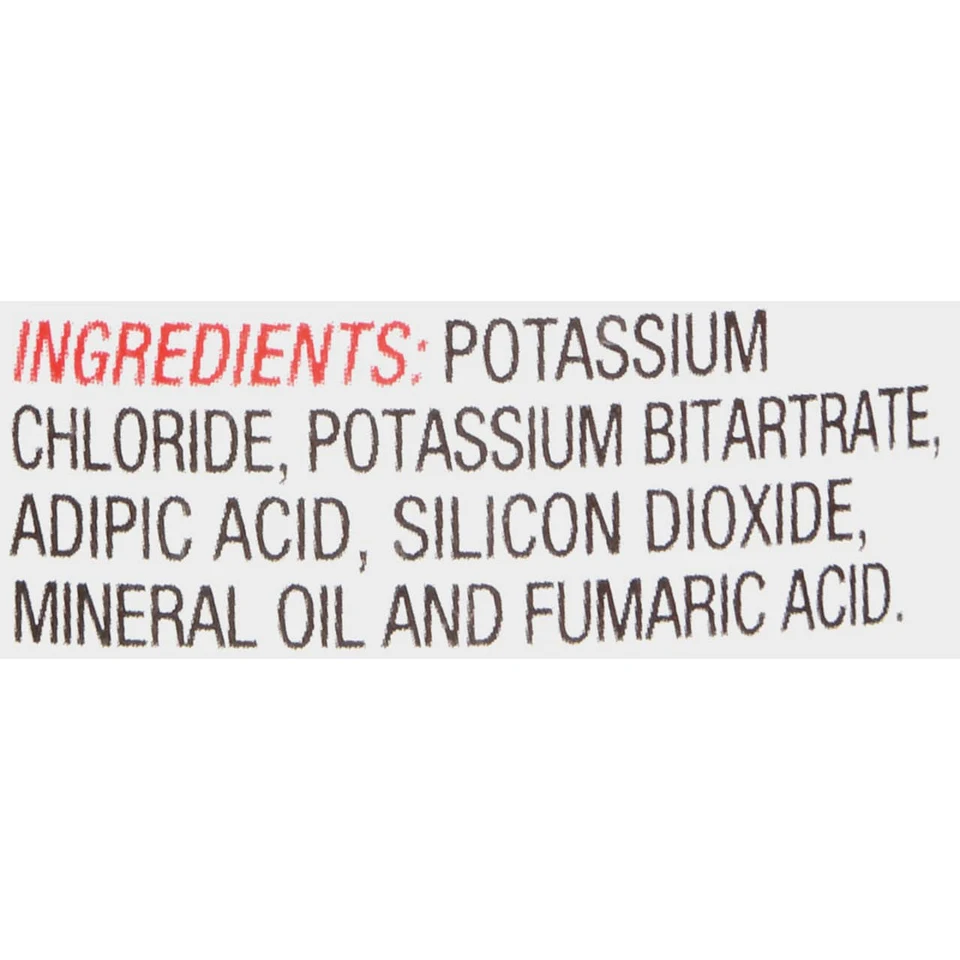
The manufacturer's ingredient list names potassium chloride, potassium bitartrate, adipic acid, silicon dioxide, mineral oil, and fumaric acid. Read the current package when it arrives, especially if a particular ingredient matters to you. The label on the product in your hand is the place to confirm what you will actually be using.
Potassium chloride is the central distinction from table salt. That distinction matters more than the familiar shaker shape or the word “salt” in a shopping category. It explains why a product can be sodium-free while still containing a mineral that may need attention in an individual's diet. Sodium-free should never be interpreted as suitable for unlimited use.
Questions about an unfamiliar ingredient should go to the manufacturer. The label names the ingredients, but it may not explain their individual functions or answer a question about manufacturing. Have the canister beside you when you get in touch so you can give the exact product name and package details. Avoid substituting an explanation about a different salt alternative.
If you need an allergen statement, certification, or information about cross-contact, look for the statement that answers that question. Don't assume a short ingredient list confirms a particular certification. Read the package you receive and use the manufacturer's contact information for anything unresolved. The gallery can help you inspect the packaging before buying, especially the side panels that are hard to see in the front view.
Keep sodium and potassium as separate questions
Reducing sodium doesn't tell you whether you also need to limit potassium. NoSalt's manufacturer advises consulting a physician before using a salt substitute. Ask about the product before using it, particularly if you have kidney disease, take medicines that affect potassium, or have been told to restrict potassium. Bring the canister or a clear photograph of its label to the conversation.
The NIH explains that some medical conditions and medicines can make potassium from foods, supplements, or salt substitutes a concern. Bring the product name and label to a clinician or pharmacist if you need an individual answer. Asking whether “a healthy salt” is acceptable is less useful than showing the exact potassium-based product and explaining how you plan to use it.
A review can tell you that someone enjoyed the taste or had trouble with a delivery. It can't tell you whether their medical circumstances match yours. Keep health decisions separate from customer ratings, even when the reviewer bought NoSalt for the same reason you're considering it. Your clinician or pharmacist can answer a question about your medicines and the product's potassium content.
Ask a specific question: 'Can I use this potassium-based salt alternative, and is there an amount I should stay within?' Show the ingredients and Nutrition Facts at the same time. If someone else buys groceries for you, pass on the product name and any instructions you've received. That helps them avoid choosing a different seasoning with a similar name.
Read a Nutrition Facts panel from the top down
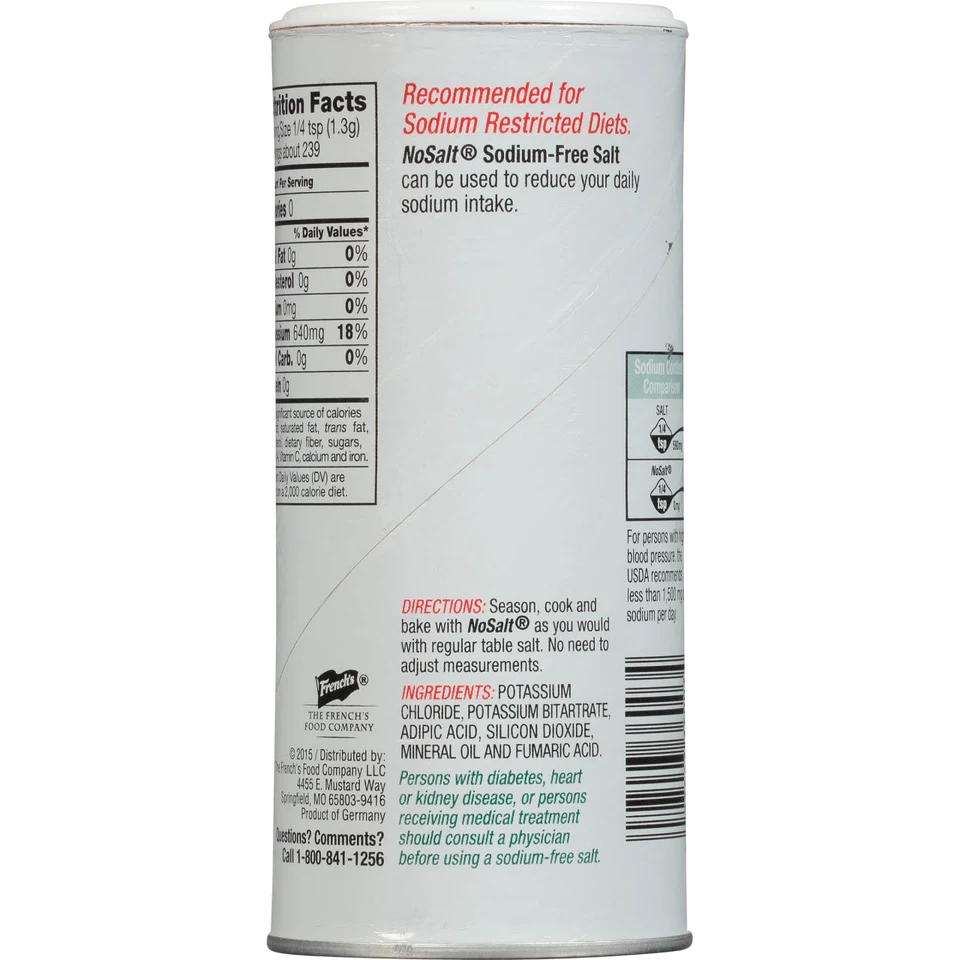
Begin with serving size. The numbers beneath it describe that stated amount, not necessarily the amount you will use at one sitting. A small-looking scoop and a level measured spoon are not automatically equivalent. If a nutrient amount is important to your eating plan, understand the stated serving before making comparisons between products.
Next identify the nutrients relevant to your question. For a sodium-free salt alternative, people often focus on sodium first, but potassium also deserves attention. Read the units carefully and distinguish milligrams from percentages. A percentage is a reference value for label interpretation; it is not a personal instruction to consume that proportion through one seasoning product.
Product photographs and older labels may show different formatting. Do not combine the serving size from one version with the nutrient numbers from another. Read one complete current label as a unit. If the package differs from a photograph, compare the full information and ask the manufacturer about anything important rather than guessing that the values are interchangeable.
Open a label photograph in the gallery to see the panel more clearly. Read the serving size with the nutrient figures beneath it, then check the directions and ingredients. After delivery, repeat those checks on the canister. If a photograph and your package differ, keep a picture of both when asking the manufacturer about the difference instead of piecing together numbers from the two versions.
Distinguish common sodium-related wording
Food labels use several expressions that sound similar in conversation. Sodium-free, low sodium, reduced sodium, and no salt added do not all mean the same thing. The FDA explains these distinctions in its sodium labeling guidance. When comparing products, read the actual sodium amount and serving size rather than ranking the appeal of the words on the front.
Reduced sodium describes a comparison with a reference food; it doesn't mean the food is sodium-free. No salt added means that salt hasn't been added, but sodium may still be present in the ingredients. And a sodium-free salt alternative can contain potassium. Read the sodium amount per serving alongside those words so you know what you're comparing.
The same check applies when you cook. Changing the salt in a soup leaves the sodium from its broth, canned ingredients, and sauces in the pot. To assess the finished meal, include all the ingredients and account for the number of servings. The NoSalt label describes NoSalt itself, so it can't establish a nutrition claim for a recipe containing several other foods.
| Wording | Useful follow-up question |
|---|---|
| Sodium-free | What are the ingredients, serving size, and potassium details? |
| Reduced sodium | How much sodium remains in the stated serving? |
| No salt added | What sodium is already present in the ingredients? |
| Salt-free seasoning | Is this an herb blend or a potassium-based alternative? |
Compare alternatives by their job in the kitchen
Table salt, potassium-based alternatives, and salt-free herb blends can occupy the same shelf while doing different things in a recipe. Table salt supplies a familiar salty taste. A potassium-based alternative provides a salty taste using potassium chloride instead of sodium chloride. An herb blend mainly changes aroma and the mix of flavors in a dish.
An herb blend gives roasted vegetables the aroma of its herbs and spices. A salt alternative supplies a salty taste. You may want one, both, or neither, depending on what else is in the dish. Taste the food before deciding. A lack of garlic or lemon won't necessarily be fixed by another shake of a potassium-based seasoning.
Some reduced-sodium salts combine different mineral salts. They should not be assumed identical to NoSalt Original. Read their ingredient lists and nutrient panels independently. The packaging color, the word “lite,” or a similar placement in a grocery aisle does not tell you enough to treat two products as interchangeable for a dietary requirement.
Choose the seasoning for the food in front of you. Is the soup missing saltiness, or would you prefer more thyme? Does the rice need seasoning once its sauce is added? The cooking guide works through vegetables, grains, and soup in more detail, including how to taste a small portion before changing a whole batch.
Choose how many canisters to buy
Choose a single canister if you haven't tried Original yet. You'll have one 11 oz container to use in your own cooking before deciding whether to keep spares. Taste varies from person to person, and the smallest pack limits how much you buy while you find out whether you like it. Check suitability before using it, whichever pack you choose.
The two-pack contains two separate 11 oz canisters. If you already use Original, you can open one and leave the other sealed in the pantry. Keep the spare where you'll see it before ordering again. If the second canister is for another kitchen, make sure the people using it know that it contains a potassium-based salt alternative.
The six-pack contains 66 oz altogether, so check your shelf space and how quickly you use an open canister. It may suit someone who already buys Original regularly. The pack count doesn't guarantee a particular remaining shelf life. Check the dates and condition of all six containers when they arrive, and follow the storage directions on the packages.
| Pack | Canisters | Total net weight | When to choose it |
|---|---|---|---|
| Single | 1 × 11 oz | 11 oz | Trying Original for the first time |
| Two-pack | 2 × 11 oz | 22 oz | Keeping one unopened spare |
| Six-pack | 6 × 11 oz | 66 oz | A larger planned pantry supply |
Compare price per ounce
A pack price is only meaningful when you know what the pack contains. Compare total quantity, canister size, and the offer selected at checkout. A lower displayed total can represent fewer canisters. A larger pack may or may not have a lower cost per ounce, and that relationship can change as the available offers change.
Divide the pack price by the total ounces to compare cost per ounce. Use 11 oz for a single canister, 22 oz for two, and 66 oz for six. Then check delivery charges and the total at checkout. If a page shows a per-canister figure, don't compare that directly with another pack's total price; convert both to the same measure first.
The prices shown here help you compare packs before opening the purchase page. Check the final price, seller, delivery charge, and quantity there before paying. Offers can change, and a different pack selection may change the total. If you return to a saved product page later, check those details again instead of relying on the amount you remember.
A lower cost per ounce isn't the only reason to choose a pack. Six canisters take more room than one, and a first-time buyer may not yet know whether they enjoy the taste. Decide how much you're likely to use before weighing a multipack discount. Paying less for each ounce won't help if most of the containers sit unopened.
Use product photographs for the questions they can answer
Use the front photograph to check the product name, then open the side views for ingredients, directions, and Nutrition Facts. The gallery includes both packaging and food photographs, so choose a label view when you need to read the canister. For a multipack, check the written pack count as well: a photograph of one canister shows the product, not necessarily the quantity in the order.
Food photographs show serving ideas. They don't provide the recipe's quantities or sodium total, and the vegetables, dishes, and kitchen props aren't included with a canister. If you want to cook something similar, choose ingredients that fit your needs and read their labels. Use the product description and pack table to confirm exactly what you're buying.
Enlarge the label while keeping the serving size and nutrient figures together on screen. If a line is still hard to read, check the manufacturer's information or the package after delivery. Guessing a number from a small photograph can lead to a mistaken comparison. For an ingredient question, the written ingredient list can be easier to read than the curved side of the canister.
Packaging designs can also change. Compare the name, quantity, and product information rather than expecting every delivery to match a historical image in every detail. If the received item appears different in a way that affects your purchase, preserve the packaging and use the support options attached to that order.
Read customer reviews as individual experiences
Taste reviews are worth reading in pairs: one from someone who liked the seasoning, another from someone who didn't. Some customers enjoy its salty flavor; others mention an aftertaste. Neither review can predict your preference. Look for what the person tasted it with, when that detail is included, rather than relying only on the star rating.
Look for the exact product and pack attached to the review. A comment about a lid, shipment, or quantity may relate to a different packaging version or seller. A review date adds context, but it does not make the experience representative of every later order. Separate observations about the seasoning from observations about delivery.
Health stories need a different level of caution. A customer's explanation of why they bought the product does not establish a health benefit or medical suitability. Do not adopt another person's treatment decisions from a review. Keep those questions with a clinician who understands your circumstances, and use reviews for the practical impressions they can reasonably offer.
The homepage includes short excerpts from customers who bought the single 11 oz product. Their opinions differ, and each excerpt has a name, date, and link to the original review. Read the review if you'd like more context. When you try the seasoning yourself, start with a small portion of food after confirming that the product is suitable for you.
Check the package when it arrives
Before putting a delivery away, compare it with the order: correct product, correct canister size, and correct pack count. Look at the container's condition and any seal or closure information provided. Read the printed label rather than assuming that a familiar front design means there is nothing new to check.
Keep the package details available if you need help. An order reference, the product name, and clear photographs of a damaged container can make it easier to explain a problem through the account used for the purchase. Food return and replacement options depend on the actual order and seller; do not assume a general retail return promise applies.
Store unopened spares in a suitable dry place according to the package instructions. Keep opened containers clearly identified and away from steam while cooking. A simple first-in, first-out routine helps prevent an older canister being forgotten behind a newer multipack. Use the dates and directions printed on each package rather than assigning your own shelf-life estimate.
Tell other cooks in the household which container holds NoSalt. Leave the ingredient panel visible and avoid refilling a shaker marked only 'salt.' If someone else prepares food for a guest, they need to be able to identify the seasoning without searching through the cupboard. Keeping the original container is the simplest way to keep that information with the product.
Example: comparing one canister with two
Suppose you're comparing the single canister with the two-pack on your phone. Open each product page and check the pack table: one contains 11 oz in total, the other 22 oz. Both contain Original. Make a note of each total price before working out the cost per ounce, since the same front photograph may appear beside both options.
Next consider whether you already know the product's taste. If you have never used it, one canister lets you try it before buying spares even when another option has a tempting unit price. If you use it regularly, a spare may be convenient. Check the cupboard before ordering, especially if someone else in the household also buys groceries.
Now check where the second canister would go. A dry cupboard with enough room to keep the label visible is easier to manage than a crowded shelf behind open packets. Put the spare behind the canister you'll use first. If you already have an unopened one there, include it in your count before adding another pack to the order.
Before paying, confirm that the selected option still matches the pack you compared. Some product pages offer several quantities close together, and moving between options may change the offer. Read the final item description, total, and delivery details. A careful comparison becomes less useful if the final selection silently changes to a different quantity.
After delivery, count the canisters and check their printed information. Keep the order record until you are satisfied that the contents match. If something is wrong, describe the difference precisely: a missing canister, an incorrect size, or visible damage is easier to resolve than a general statement that the package seems unusual.
Keep a short shopping note with the exact name and pack count if someone else will order for you. 'NoSalt Original, two 11 oz canisters' is clearer than 'salt substitute, large pack.' They can check that wording against the final order. If the offer changes, compare the new total and quantity before accepting a replacement pack or a different brand.
Before you buy
Before your first purchase, check the product's suitability with a physician. Then decide how many canisters you need. A single container gives you a chance to try the taste; two or six make more sense once you know you'll use it. Compare quantities and unit prices only after those decisions, so the largest discount doesn't choose the pack for you.
At checkout, read the final product name, pack count, total price, and delivery details. When the order arrives, count the canisters before putting them away and read one complete label. Keep the order reference until you've checked the delivery. If there is a problem, photographs of the contents and packaging will help you explain it clearly.
Once the canister is in the kitchen, choose a dish you already cook and try seasoning a small portion. Our meal-planning guide shows how a tray dinner, grain bowl, and soup can share ingredients over several meals. Keep the rest of the canister labeled and dry, and use the package directions whenever you cook with it.
Sources for product and label information: NoSalt product information, NIH potassium fact sheet, and FDA sodium label guidance.